
A data carrier on the product
Usually a QR code. Scanning it resolves a unique product identifier to the passport record — no app required, and it has to stay reachable well after the sale.
The EU is attaching a structured data record to physical products — reachable by QR code, readable by customers, repairers, recyclers and market surveillance authorities. This site is the reference for PrestaShop merchants: which of your products are affected, what data you have to collect, when each deadline actually lands, and where that data lives in your store.
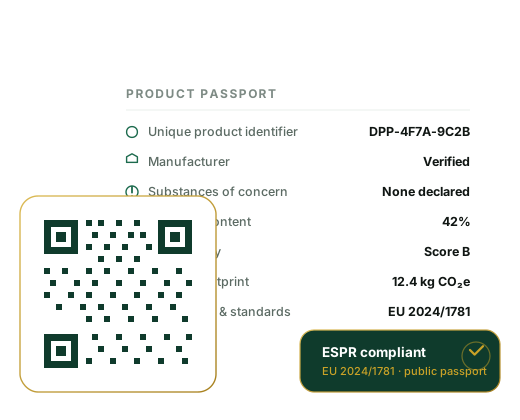
Not a label, and not a certificate. A structured, machine-readable data record tied to a specific product and reachable from a data carrier on it.
Usually a QR code. Scanning it resolves a unique product identifier to the passport record — no app required, and it has to stay reachable well after the sale.
Durability, repairability, recycled content, substances of concern, carbon footprint. The exact list is fixed per product group by a delegated act — not chosen by the seller.
Consumers, repairers, recyclers and authorities each get the slice relevant to them. Some fields are public; others are restricted to specific actors.
Longer read: What is a Digital Product Passport? · Which data fields are required
The passport obligation sits with whoever places the product on the EU market. If you resell goods a manufacturer or importer already placed on the market, the record is largely their job — but your duties are not zero.
It flips if you import from outside the EU yourself, sell under your own brand, or modify a product substantially. Then you are on the hook for the whole record.
Where a product is offered for sale online, the consumer-facing passport information has to be accessible before the customer buys — not printed on a box that arrives three days later.
In practice the passport, or a link to it, belongs on the product page. That is a storefront problem, which is how it becomes your problem even when you did not author the data.
The DPP does not arrive everywhere at once. Each product group gets its own delegated act, its own data fields and its own date. Start from what you sell.
The only product group with a binding passport date already set. LMT, EV and industrial batteries above 2 kWh, from 18 February 2027.
In force · deadline 18 Feb 2027
First named priority under ESPR, and already subject to the unsold-goods destruction ban that took effect in July 2026.
Delegated act indicative 2027
A priority group with an indicative 2027 act, and one that already carries mandatory EU labelling.
Delegated act indicative 2027
Not one group but many. Electronics come in through energy-related products and horizontal rules, on a schedule running from 2026 to 2030.
Staggered 2026 → 2030
A passport is a data problem before it is a compliance problem. PrestaShop gives you several places to put it, each with real trade-offs.
Native, no code, visible in the back office. Fine for a dozen fields on a small catalogue; painful past that, and weakly typed.
Proper schema, validation, bulk import, versioning and a public passport route. The realistic answer for a catalogue of any size.
The record lives with a provider; PrestaShop stores an identifier and renders a link. Less control, but identifier resolution stops being your problem.
Abridged. The full map, with a source for every entry, is on the deadlines page.
The data collection is the slow part — chasing suppliers for recycled content and substance declarations takes months, not weeks. The readiness checklist walks your catalogue group by group.